Skip to content

Ironman New Zealand 2018 (March 3rd) – Seedings

IMNZLogoPrevious Winners

Year Male Winner Time Female Winner Time
2005 Cameron Brown (NZL) 08:20:15 Joanna Lawn (NZL) 09:30:14
2006 Ain-Alar Juhanson (EST) 03:31:05 Joanna Lawn (NZL) 04:10:32
2007 Cameron Brown (NZL) 08:26:33 Joanna Lawn (NZL) 09:20:02
2008 Cameron Brown (NZL) 08:24:49 Joanna Lawn (NZL) 09:16:00
2009 Cameron Brown (NZL) 08:18:05 Gina Crawford (NZL) 09:18:26
2010 Cameron Brown (NZL) 08:21:52 Joanna Lawn (NZL) 09:14:35
2011 Cameron Brown (NZL) 08:31:07 Samantha Warriner (NZL) 09:28:24
2012 Marino Vanhoenacker (BEL) 03:55:03 Meredith Kessler (USA) 04:22:46
2013 Bevan Docherty (NZL) 08:15:35 Meredith Kessler (USA) 09:17:10
2014 Marko Albert (EST) 08:17:33 Meredith Kessler (USA) 09:08:46
2015 Cameron Brown (NZL) 08:22:13 Meredith Kessler (USA) 09:05:45
2016 Cameron Brown (NZL) 08:07:58 Meredith Kessler (USA) 08:56:08
2017 Braden Currie (NZL) 08:20:58 Jocelyn McCauley (USA) 09:09:47

Last Year’s TOP 3

Male Race Results

Rank Name Nation Swim Bike Run Time
1 Braden Currie NZL 00:48:11 04:39:55 02:48:23 08:20:58
2 Cameron Brown NZL 00:53:17 04:43:46 02:42:29 08:24:32
3 Cyril Viennot FRA 00:53:23 04:42:28 02:43:39 08:25:43

Female Race Results

Rank Name Nation Swim Bike Run Time
1 Jocelyn McCauley USA 00:59:14 05:05:24 02:59:40 09:09:47
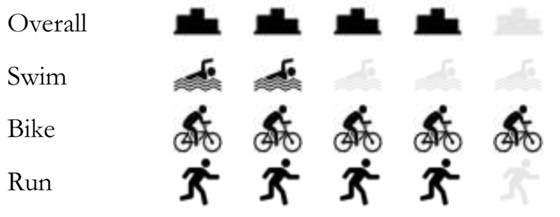
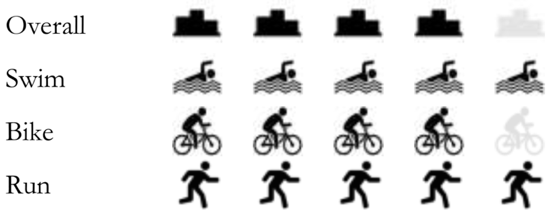
2 Laura Siddall GBR 00:59:16 05:05:00 03:12:47 09:21:53
3 Meredith Kessler USA 00:53:23 05:10:54 03:18:11 09:27:19

Course Records

Leg Gender Record Athlete Date
Total overall 08:07:58 Cameron Brown 2016-03-05
Swim overall 00:44:26 Dylan McNeice 2015-03-07
Bike overall 04:22:13 Dougal Allan 2016-03-05
Run overall 02:41:20 Matt Hanson 2016-03-05
Total female 08:56:08 Meredith Kessler 2016-03-05
Swim female 00:46:30 Monica Byrn 2005-05-03
Bike female 04:51:39 Lucy Gossage 2016-03-05
Run female 02:59:10 Jess Draskau-Petersson 2004-03-06

Course Rating

The Course Rating for IM New Zealand is 07:50.

Race Adjustments for IM New Zealand

Year Adjustment Swim Adj. Bike Adj. Run Adj. # of Finishers Rating Swim Rating Bike Rating Run Rating
2005 31:32 00:29 03:46 44:39 38 31:32 00:29 03:46 44:39
2007 13:55 01:32 01:36 03:11 24 22:43 01:00 02:41 23:55
2008 11:36 02:09 04:31 03:41 36 19:01 01:23 03:18 17:10
2009 10:19 00:34 05:26 02:37 38 16:50 01:11 03:50 13:32
2010 09:24 01:38 03:03 04:02 22 15:21 01:16 03:40 11:38
2011 -04:08 00:50 01:34 -01:19 24 12:06 01:12 03:19 09:28
2013 00:01 01:14 03:44 -00:07 24 10:23 01:12 03:23 08:06
2014 05:41 01:27 01:01 02:44 31 of 41 09:47 01:14 03:05 07:26
2015 05:53 01:33 03:54 04:58 22 of 27 09:21 01:16 03:11 07:09
2016 06:06 02:21 09:30 03:31 37 of 49 09:02 01:23 03:49 06:48
2017 -04:08 -02:45 -00:06 01:02 27 of 40 07:50 01:00 03:27 06:16

KPR points and Prize Money

IM New Zealand is a P-2000 race. It has a total prize purse of 60.000 US$.

Male Race Participants

The strength of the field is 15% of a typical Kona field.

Rank Bib Name Nation Expected Time Rating Exp. Swim Exp. Bike Exp. T2 Exp. Run Consistency Overall
1 6 Mike Phillips NZL 08:12:40 08:32:11 00:48:47 04:29:58 05:23:45 02:48:55 42% +58% -0% (2) (50)
2 4 Terenzo Bozzone NZL 08:14:00 08:21:08 00:46:21 04:31:12 05:22:33 02:51:27 51% +33% -16% (15) 15
3 1 Braden Currie NZL 08:14:48 08:29:45 00:45:47 04:37:26 05:28:14 02:46:34 39% +26% -35% (4) 37
4 2 Cameron Brown NZL 08:14:50 08:26:49 00:49:34 04:38:18 05:32:52 02:41:58 63% +9% -28% (35) 25
5 19 Joe Skipper GBR 08:15:21 08:27:43 00:52:46 04:32:29 05:30:15 02:45:06 57% +14% -29% (19) 30
6 3 Cyril Viennot FRA 08:18:44 08:33:41 00:49:52 04:36:06 05:30:58 02:47:46 61% +8% -31% (21) 55
7 15 Callum Millward NZL 08:18:56 08:32:38 00:48:24 04:36:48 05:30:12 02:48:44 71% +0% -29% (9) 52
8 7 Dougal Allan NZL 08:21:57 08:34:01 00:56:17 04:27:04 05:28:21 02:53:36 88% +5% -7% (10) 57
9 21 Jan Van Berkel SUI 08:26:00 08:33:49 00:48:22 04:38:12 05:31:35 02:54:25 63% +17% -20% (16) 56
10 10 Stephen Kilshaw CAN 08:28:05 08:56:46 00:52:19 04:39:22 05:36:40 02:51:25 15% +41% -44% (12) 133
11 14 Dylan McNeice NZL 08:37:04 08:55:03 00:45:01 04:47:57 05:37:58 02:59:06 41% +11% -48% (16) (122)
12 23 Chris McDonald AUS 08:37:05 08:48:45 00:52:01 04:40:39 05:37:41 02:59:24 57% +9% -34% (48) 100
13 5 Simon Cochrane NZL 08:38:13 08:56:09 00:49:39 04:45:18 05:39:57 02:58:16 65% +13% -22% (21) 127
14 8 Guy Crawford NZL 08:44:56 09:13:15 00:48:42 04:36:01 05:29:43 03:15:13 28% +32% -40% (15) 187
15 11 Sam Long USA 08:48:02 09:03:47 00:56:05 04:42:20 05:43:25 03:04:37 70% +0% -30% (4) 160
16 17 Carl Read NZL 08:52:31 09:23:07 00:52:44 04:58:15 05:55:59 02:56:32 50% +5% -45% (13) 217
17 18 Nathan Shearer AUS 09:00:20 09:27:12 00:56:05 04:51:09 05:52:14 03:08:06 49% +51% -0% (2) (227)
18 12 James Lubinski USA 09:01:56 09:19:11 01:02:27 04:54:41 06:02:08 02:59:48 54% +30% -17% (21) 203
19 9 Lachlan Kerin AUS 09:05:37 09:30:28 00:52:03 04:54:30 05:51:33 03:14:04 18% +62% -19% (3) (234)
20 20 Leigh Stabryla AUS 09:08:41 09:25:19 00:49:08 05:17:11 06:11:18 02:57:23 55% +0% -45% (4) (222)
21 16 Michael Poole NZL 09:16:25 09:38:49 00:50:31 04:47:55 05:43:26 03:32:59 71% +0% -29% (2) (258)
22 22 Valentin Zasypkin RUS 10:00:03 10:17:59 01:07:34 05:20:19 06:32:52 03:27:11 20% +63% -17% (10) 287

Female Race Participants

The strength of the field is 6% of a typical Kona field.

# Bib Name Nat Expected Rating ESwim EBike ET2 ERun Consistency Overall
1 25 Jocelyn McCauley USA 09:04:31 09:25:56 00:54:52 05:05:47 06:05:38 02:58:53 30% +52% -18% (8) 25
2 26 Laura Siddall GBR 09:09:48 09:20:53 00:56:13 05:00:06 06:01:18 03:08:30 64% +31% -4% (13) 11
3 33 Jessie Donavan USA 09:33:43 09:39:47 01:05:38 05:06:33 06:17:10 03:16:33 98% +2% -0% (17) 45
4 27 Fawn Whiting CAN 09:48:36 09:58:56 01:03:22 05:26:40 06:35:01 03:13:35 100% +0% -0% (3) 74
5 29 Kate Bevilaqua AUS 09:52:13 10:10:11 00:55:36 05:23:44 06:24:21 03:27:52 35% +4% -61% (30) 104
6 30 Jessica Mitchell AUS 09:55:33 10:13:24 01:03:34 05:23:27 06:32:01 03:23:32 38% +62% -0% (4) 112
7 39 Caroline St-Pierre CAN 09:57:20 10:09:33 00:56:40 05:40:14 06:41:54 03:15:26 74% +0% -26% (4) 102
8 32 Palmira Alvarez MEX 10:06:52 10:23:46 01:06:02 05:23:43 06:34:46 03:32:06 79% +21% -0% (5) 122
9 34 Julia Grant NZL 10:10:28 10:24:17 00:59:12 05:37:50 06:42:02 03:28:26 58% +0% -42% (7) (123)
10 35 Caroline Gregory USA 10:11:08 10:36:38 00:55:43 05:41:39 06:42:22 03:28:46 35% +5% -60% (14) 142
31 Teresa Adam NZL n/a unrated unrated unrated unrated unrated n/a (no IM Pro race) (n/a)
36 Helena Kotopulu CZE n/a unrated unrated unrated unrated unrated n/a (no IM Pro race) (n/a)
37 Indy Kraal NZL n/a unrated unrated unrated unrated unrated n/a (no IM Pro race) (n/a)
38 Alise Selsmark AUS n/a unrated unrated unrated unrated unrated n/a (no IM Pro race) (n/a)

Winning Odds

Male Race Participants

There is a large number candidates for the win on the men’s side: Terenzo Bozzone has had a couple of great Ironman races in the last years, but he’s still looking for the first title in his home Ironman race. When Joe Skipper is racing well, he’s clearly one of the fastest IM-distance athletes. Braden Currie is back to defend his title from last year, while Cam Brown has always raced well in Taupo and has won IM New Zealand twelve times already. Mike Philips hs only finished two IMs yet, but he’s already gone sub-8 and won last December’s 70.3 Taupo.

  • Terenzo Bozzone: 25% (3-1)
  • Joe Skipper: 21% (4-1)
  • Braden Currie: 18% (5-1)
  • Cameron Brown: 15% (5-1)
  • Mike Phillips: 10% (9-1)
  • Cyril Viennot: 4% (23-1)

Female Race Participants

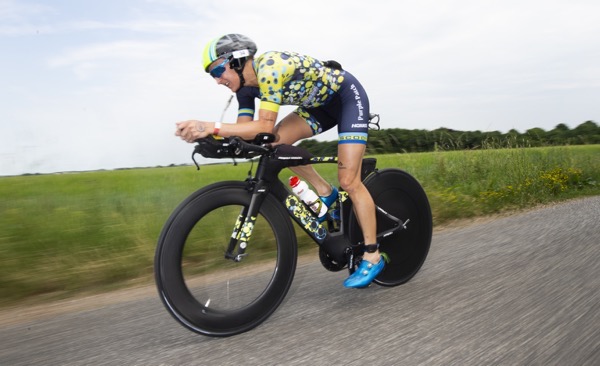
On the female side, there are two main contender’s for the win: Last year’s winner Jocelyn McCauley and last year’s second place finisher Laura Siddall. Laura is clearly the faster athlete on the bike and is the likely T2 leader, but if Jocelyn manages to run a sub-3 marathon as she did last year, she’ll be hard to beat.

  • Laura Siddall: 46% (1-1)
  • Jocelyn McCauley: 45% (1-1)
  • Jessie Donavan: 6% (15-1)

Age of Kona Winners

After the latest race in Kona it’s time to update my graph on the Age of Kona Winners. Technically, the graphs show the how old the winners of Ironman Hawaii (mostly Kona, but also the early years on Oahu) at the time that they won the race. (Click on the images for high-res versions.)

AgeKonaWinners

A few observations:

  • The winnings streaks of Dave Scott (six times between 1980 and 1987) and Mark Allen (six times between 1989 and 1995) clearly stand out.
  • Paula Newby-Fraser’s eight wins occurred over a span of ten years (1986 to 1996).
  • Natascha Badmann took six wins over seven years, her reign was broken twice by Lori Bowden.
  • The progression of the men’s winners in the early 2000s looks like another dynasty, in fact it’s three different athletes (Stadler, McCormack and Alexander) that are almost the same age.
  • In the last few years, there are three “serial winners” on the female side: Chrissie Wellington (four wins), Mirinda Carfrae and Daniela Ryf (both three wins).

Here is another view on the data:

AgeKonaWinnersBar

This “text bar chart” makes it easier to spot a few other things:

  • The youngest female winners are Kathleen McCartney (1982) and Sylviane Puntous (1983) at 22 years.
  • The youngest male winner was Scott Tinley (also in 1982) with 25 years.
  • Most of the “young winners” are from the early years of the race. Daniela Ryf was the youngest winner in the 2000s, she was 28 in 2015, but there were eleven female winners that were younger than her. On the male side, Faris Al-Sultan was 27 when he won in 2005, he’s the only winner in the 2000s who was younger than 30.
  • Craig Alexander (2011) and Natascha Badmann (2005) are the oldest male and female winners at 38 years of age.

Ironman New Zealand 2018 (March 3rd) – Entry List

  • Feb 7th: Added Teresa Adam, Jessie Donavan, Julia Grant, Indy Kraal, Jessica Mitchell, Caroline St-Pierre (WPRO);  Cameron Brown, Simon Cochrane, Lachlan Kerin, Stephen Kilshaw, Sam Long, James Lubinski, Dylan McNeice, Mike Phillips, Nathan Shearer, Joe Skipper (MPRO)

Male Race Participants

Name Nation KPR points KPR races
Mike Phillips NZL 2350 1+1
Simon Cochrane NZL 1500 1+2 (1280/80)
Guy Crawford NZL 1030 1+2 (720/30)
Cameron Brown NZL 960 1+0
Nathan Shearer AUS 720 1+0
Joe Skipper GBR 540 1+0
Dylan McNeice NZL 435 0+1
Jan Van Berkel SUI 340 1+0
Sam Long USA 305 1+0
Leigh Stabryla AUS 230 1+0
James Lubinski USA 170 1+0
Lachlan Kerin AUS 145 0+1
Valentin Zasypkin RUS 2 1+0
Stephen Kilshaw CAN 0 0+0
Cyril Viennot FRA 0 0+0

Female Race Participants

Name Nation KPR points KPR races
Jocelyn McCauley USA 4490 1+2 (3100/640)
Kate Bevilaqua AUS 2215 1+2 (1600/75)
Jessie Donavan USA 2165 2+1
Laura Siddall GBR 1810 1+1
Fawn Whiting CAN 540 1+0
Julia Grant NZL 250 0+2 (0/115)
Palmira Alvarez MEX 125 2+0
Caroline Gregory USA 40 1+0
Tracy Douglas AUS 0 0+0
Jessica Mitchell AUS 0 0+0
Natascha Schmitt GER 0 0+0
Caroline St-Pierre CAN 0 0+0
Teresa Adam NZL    
Helena Kotopulu CZE    
Indy Kraal NZL    

New Pro Qualifying System

Ironman has announced a new system qualifying Pros for Kona. Some of the initial reactions were quite positive, but with the timing of the announcement I was sceptical: Typically the “low news” time around Christmas is best for news not intended to get much attention. So let’s unpack the announcement and discuss the changes the new system will bring .. even if posting this on Christmas Eve might result in not too many readers. (Happy Holidays to you if read this during the Christmas Days!)

Still no Equality in Kona … In Fact Hardly Any Change at All

When quickly reading the Ironman press release, the main point you notice that “slot allocations will be equal for both male and female professional athletes”. The “featured image” is a jubilant Michelle Vesterby, further enhancing the perception that this is great for female athletes. However, the sentence I quoted is preceded by the qualifier “base” and followed by “additional slots being distributed to events based on the number of professional starters”. Only when looking closer what this will mean for races and the gender distribution it becomes apparent that the overwhelming majority of these “additional slots” will be allocated to the male Pros, and that the breakdown of the Kona field will be very similar to what it is now (roughly 40 females and 60 males, see my post Estimating the Gender Distribution for Kona). The females will have to constitute about 38% of the total Pro field (the 2017 average was 33.9%) before they have a chance of snagging one of the floating slots.

From an equality perspective, probably the only advantage of the slot system is that increased female Pro participation can lead to more female Kona slots, whereas the KPR system fixed the number of slots. However, I don’t like that this pits the female Pros against the male Pros – if the women want more slots, they have to “take” them from the men. This is counter-productive for growing Pro racing and the sport as a whole.

Equality is also a glaring contradiction in the new Ironman system: While Kona won’t have equal Pro slots, the 70.3 Championships provides the same 85 slots for both the male and females. Ironman has to be applauded for equal slots at the 70.3 Champs, but their argument of “increasing the female field in Kona would dilute the field too much” is making less and less sense. It’s also hard to see why there are 85 Championship-worthy women on the 70.3 distance, but no more than 40 on the full distance.

From the equality viewpoint, the new system is a “meh” – hardly any change. It would be so easy to provide equal slots for male and females in Kona – just provide the same number of floating slots to males and females! They don’t even have to be assigned to the same races, you could showcase the female Pros in a couple of races by assigning two additional slots just to the females (of course offset by races with only additional slots for the men).

Less Racing Required To Qualify

When looking through the changes the new system would have made to the Kona 2017 field (see my post Determining the Kona 2017 With the New Slot System) one big advantage for athletes is obvious: One great result (resulting in a win in an Ironman) is enough for a Kona slot – the new system’s quick summary could be “win and you’re in”. In the KPR system, most male athletes had to race at least two IMs and most females three IMs or more to score enough points to secure a slot. This aspect is a great benefit especially to the female athletes – the KPR system forced them to race more often than the male Pros as they needed more points to qualify. Of course there is a drawback for the second tier athletes that were consistently racing well but not winning races: It’ll be a lot harder for them to make it to Kona now as qualifying with a third or fourth place needs a big element of luck (athletes finishing in front have to decline their slots).

In an indirect way, this also addresses the issue of female Pros returning after their pregnancy to racing: Often they couldn’t race a full season to collect points, for example in 2017 Rachel Joyce or Eva Wutti only started racing in March when more than the half of the season was already gone and most athletes were already way ahead of them. It took Rachel three full IMs to make up this deficit, while even a win and a second place were not enough for Eva. With the new system in place, their first good IM would have been enough to qualify them for Kona: Rachel won IM Boulder and Eva won IM Austria.

The new system is also good as a lot of athletes secure their Kona slot early in the season (well before the current first cutoff at the end of July) and are then able to plan their season without having to focus on scoring more points to qualify. This probably won’t matter to the very best athletes – they didn’t have to worry too much about qualifying anyways. But overall a lot more athletes can be rested and in top shape on the Kona start line, probably making the race in Kona even tighter and more exciting than it already is.

Overall, the fact that less racing gets you to Kona addresses a big deficiency of the KPR system and gets a “thumbs up”.

Decreased Weight of Kona and 70.3s

Under the new system, only the Top 3 finishers in Kona will secure an AQ slot for the following year (validation still required). Under the KPR system, you could pretty much secure your slot after a Top 10 finish in Kona by racing another late season Ironman (some popular choices in November or December were Arizona, Cozumel or Western Australia). On the back of Kona fitness, a Top 6 finish was achievable in the usually relatively small fields. This will no longer be enough to qualify – even after a Kona Top 10 a win will still be needed.

Also, 70.3s don’t play any role in Kona qualifying at all (unless you win the 70.3 Champs). This is also a good development, sometimes lots of 70.3 points made it relatively easy to qualify for Kona. Altogether, another positive change.

Number of Qualifiers Tied To Number of Pro Races

As each of the Pro races creates at least one slot for the male and female racers, the number of athletes in Kona and the 70.3 Champs can’t be any lower than the number of Pro races. Currently, this will make it quite hard to reduce the number of male athletes in Kona – even though a lot of Pros would have preferred smaller fields to allow for a “cleaner” race. Fewer Kona Pros would only be possible with a reduced number of Pro races. So far Ironman has not indicated that they want to shrink the Pro calendar, and there are good arguments for an expansion in the Asian market. Still, the overall reduction in Ironman prize money (6% less in 2017 as compared to 2016) could also indicate fewer races in the future – we’ll probably have to wait for Ironman to indicate what their plans are going to be.

Tying the number of races to the number of qualifiers leads to the huge number of 170 Pro athletes for the 70.3 Championships, almost twice the number of Pros in Kona. The actual number of athletes on the start line will likely be lower. For example, this year’s 70.3 Champs in Chattanooga had more about 55 male and female qualifiers who accepted their slots, but only 33 males and 36 females actually racing.

Overall, “one race, one slot” isn’t much of a problem for Kona qualifying but creates a huge field for the 70.3 Champs. Unless a lot of athletes decide not to race, this is likely a “breaking point”, leading either to fewer Pro 70.3s or to 70.3s that offer a Pro category and prize money but no Kona slots.

Overall Assessment

To me, the benefit of the old KPR system was that it provided a lot of analysis opportunity for data geeks like me. So far I haven’t heard anyone who is sorry to see the KPR to disappear. The slot system is definitely an improvement by removing a lot of the criticisms of the KPR, but the way it is proposed for now it still falls short of providing equality in Kona.

Select your currency
EUR Euro

By continuing to use the site, you agree to the use of cookies. more information

The cookie settings on this website are set to "allow cookies" to give you the best browsing experience possible. If you continue to use this website without changing your cookie settings or you click "Accept" below then you are consenting to this.

Close