Skip to content

Analysis

Ironman to Offer Enhanced Coverage of Major Races

At the end of January Ironman has announced that they want to improve the online coverage of their major races. Here’s a more detailed look at some of the questions around this issue. (Thanks to Joe Skipper for providing additional information.)

Races to be Covered

According to the press release Ironman wants to cover the Ironman World Championships (Kona), 70.3 World Championships (this year in Zell am See, Austria) and the five regional Championships (Melbourne, South Africa, Texas, Brasil and Frankfurt).

The first race that will benefit from this enhanced coverage will be Ironman Melbourne on March 22nd. It is not clear if there will also be enhanced coverage for IM South Africa – it is also a Regional Championship but just one week after Melbourne, so there may not be enough time to learn from the „beta test“ (Ironman’s words) in Melbourne.

Improved Ironman Live

For the races indicated above, Ironman will produce “a hosted online show with extensive, in-depth coverage of the professional race“. My expectation is that this will be a similar setup to the coverage that we have seen from Kona – mainly a couple of commentators in a „studio” with live pictures from the course and some additional commentary. However, it is very good to hear that Ironman has learned from the mistake of the non-coverage of 70.3 Championships in Mont Tremblant.

GPS Tracking

The main change to the coverage will be that every Pro athlete will be required to wear a GPS tracking device on the bike and run. The GPS data will feed into a new athlete tracking platform (dubbed Ironfan). Athletes can also opt into transferring additional biometric data such as HR or power.

This data will be very interesting (can I have a live feed, please?) but I’m somewhat skeptical about the value this will bring for following the race:

  • I don’t think too many athletes will be open to provide important data to their competitors.
  • The current Athlete Tracker had major functional and stability problems. It will be a huge ask for the new platform to work better, more stable and with a much larger amount of data.
  • Ironman has not been very good in using their data. For example, they have failed to provide really useful leaderboards. I’m not very optimistic that they will do better with the GPS data: They said that they will show this data “in an intuitive, map-driven design“. While that is certainly a cool way to look at it, distance between athletes has so far been expressed in time rather than shown on a map.

GPS Devices

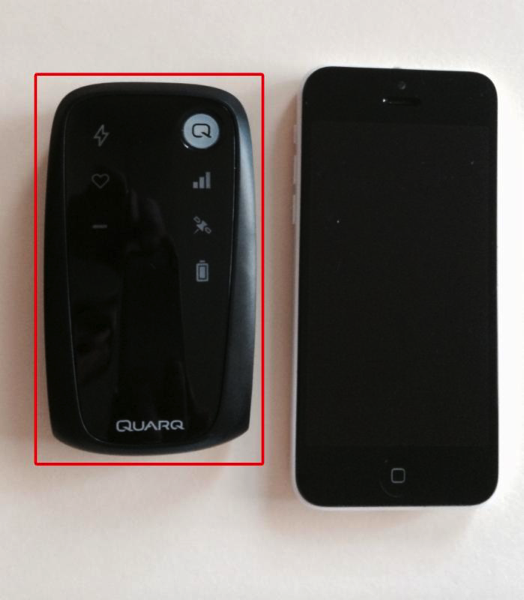
In order to provide the GPS data, all athletes will have to carry a device supplied by Ironman. The size of the device may be a bit of a surprise to athletes, expecting something like a timing chip. In fact, the device is only slightly smaller than an iPhone 5, about the same weight but about three times as thick:
Tracking Device

As far as I can tell, the size of the device makes sense: It is basically a complete smart phone with a GPS chip, a cell phone to transfer the data and a large battery.

To help athletes carry the device, Ironman will provide „specifically-designed pouches“. However, athletes can have their own race belt to carry the device. In addition, some athletes (for example Martin Jensen) have indicated that they are working with their clothing sponsor to integrate a carrying pocket into their race suit, similar to the pitches for radios that the cycling Pros have in their clothing.

At first, carrying the unit will be new, and there will be some grumbling from those athletes that haven’t prepared in time for them. But over time, I expect these issues to go away, especially when technology advances will make the units smaller.

For now, the GPS tracking will be limited to Pros in major races, but Andrew Messick said that they hope to „expand .. to all races and to age-group athletes in the future“.

My Assessment

In general, the introduction of GPS tracking and the enhanced race coverage has the potential to be a very good move by Ironman, one that can make following races online much more interesting and help Pros to raise their profile. It would be great to be able to follow races online at a level comparable or even better than what the ITU and Challenge have been doing.

I hope that Ironman will be able to deliver on this potential and I’m willing to give them some time to get things right. But too often, Ironman efforts have been half-hearted and ultimately disappointing. I’ll be anxiously watching for Ironman to get things right this time!
Depth in Women’s Field – Changes over the Years

Late last year, I’ve looked at data concerning the depth of the women’s field and comparing that to the depth of the men’s field. (If you haven’t read it yet, please check out my post “Women’s Field as Deep as Men’s?“.) I have to admit that I was a bit surprised that I wasn’t finding any noticeable difference in recent year’s. My first interest into triathlon was in the late 80’s when Paula Newby-Fraser was such a dominating force in the sport that she seemed to win almost at will and if there was only an Erin Baker on a good day who was able to challenge her.

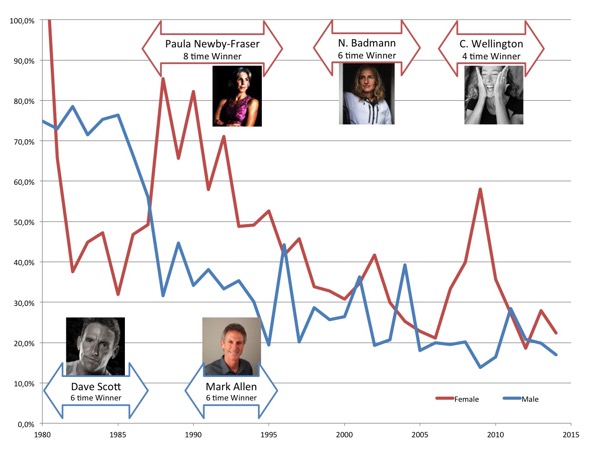
This led me to have a look at some older data – maybe the depth of the women’s field has improved over time? I wasn’t able to produce the same type of graphs that I used in my previous post as I just don’t have the data. However, I was able to find a list of the top 10 finishers on Slowtwitch (Top Ironman Hawaii Finishers Archive) that I used as my basis for a similar analysis. As a measure for the depth of the field I am using the Top 10 degradation, defined as the cumulative time the Top 10 finishers were behind the winner in each year (for example, in 2014 the Top10 men were 1h24min behind the winner, while the women were 2h01min behind). In order to reflect the different winning times for men and women, I’m calculating the percentage of this sum of the winner’s time (still using 2014 data, 17% for the men, 22.4% for the women). Please note that this measure doesn’t reflect the different field sizes (that lead to increased time differences) – meaning that a similar depth of field would have a larger Top 10 degradation for the women.

Here’s the graph showing the development of the Top10 degradation in Kona over the years for the men (blue line) and women (red line):

Top10Analysis

In order to give context to the time periods, I’ve added some of the biggest Kona winners. Here’s my interpretation of this data:

  • Dave Scott was dominating Kona early on, his six wins were between 1980 and 1988. He was head and shoulders above most of the other Kona athletes and the degradation is at the highest level we have for the men.
    At this time, the degradation for the women is actually lower than for the men – but this is probably more a sign that even the women’s  top racers were still finding their way in this new sport.
  • This changes with the start of winning streak by Paula Newby-Fraser (her first Kona win was in 1986, her eighth and last was in 1996), she was dominating at similar levels to Dave Scott.
  • After Dave and Paula, Mark Allen and Natascha Badmann both won six Kona crowns, but they didn’t dominate the fields as much. (This probably makes their winning streaks even more impressive as they managed to win a lot of close races.)
    In the early 2000s, the Top10 degradation numbers were pretty much the same between the men and women.
  • This changed for a while when Chrissie Wellington won her four Kona titles. In 2009 her third win displayed a domination over the rest of the field comparable to what Paula showed.
  • In the last few years, the Top 10 degradation between men and women is back at very similar numbers.

My conclusion of this data: In the early years of our sport, it took some time to develop a decent depth of the field. The men’s field improved first (until the late 80s – at the end of the Dave Scott era), and the women’s field took about ten years longer (until the late 90s – the Natascha Badmann era). Certainly, things have changed a lot since the days of Paula Newby-Fraser – it now takes an absolutely dominating figure such as Chrissie Wellington to „disrupt“ the numbers. Chrissie pushed the women’s field another big step forward, and these days the Top10 degradation indicates no different depth between the men’s and women’s field.

Updated Top 10 Ratings

This is an excerpt from my free 2014 TriRating Report which has a lot more information and data on the 2014 season. You can still download it for free!

Men’s Top 10

Rank Name Nation Rating Last Race # Races
1 Sebastian Kienle GER 08:12:57 IM Hawaii on 2014-10-11 9
2 Nils Frommhold GER 08:14:10 IM Hawaii on 2014-10-11 4
3 Frederik Van Lierde BEL 08:19:33 IM Hawaii on 2014-10-11 14
4 Dirk Bockel LUX 08:21:49 Challenge Roth on 2014-07-20 11
5 Eneko Llanos ESP 08:22:10 IM Fortaleza on 2014-11-09 20
6 Craig Alexander AUS 08:23:13 IM Hawaii on 2014-10-11 12
7 Timo Bracht GER 08:23:54 IM Mallorca on 2014-09-27 23
8 Clemente Alonso McKernan ESP 08:25:34 IM Cozumel on 2014-11-30 11
9 Bart Aernouts BEL 08:25:34 IM Hawaii on 2014-10-11 6
10 Jordan Rapp USA 08:26:02 IM Arizona on 2014-11-16 13

There were a lot of changes and shifts in my Top 10 ratings in 2014.

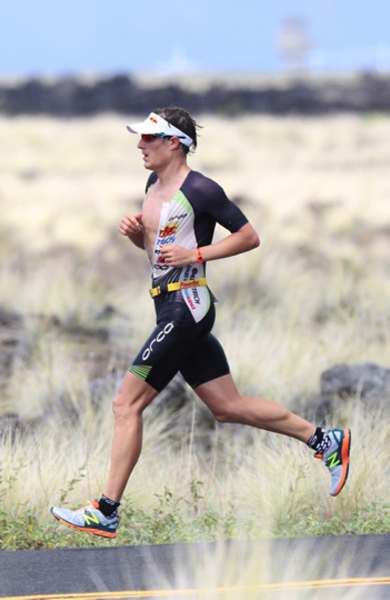
SebiRunClearly, Sebastian Kienle had a dream year on the Ironman distance, winning in Frankfurt and in Kona. His only disappointment was the 70.3 World Champs – but of course that doesn’t influence his IM rating which he improved by almost 10 minutes! He is my new #1 rated athlete.
There is only a small difference from Sebi to #2 Nils Frommhold. After having to take most of 2013 off with an injury, Nils won IM South Africa, placed second in Roth and had a great first race in Kona, finishing 6th. He hasn’t had a “bad” Ironman race yet, and it’ll be interesting to see if he can improve further while staying healthy.

Last year’s Kona champion Frederick Van Lierde wasn’t able to build on his great 2013 season – but still managed to climb into #3 while improving his rating with a solid 2nd place in Frankfurt (just missing the 8-hour barrier) and finishing 8th in Kona. His Kona result will probably be a disappointment for him – he was in a good position on the run in second place, but ran out of steam in the Energy Lab. I don’t think we’ve seen his best Kona race yet!

Dirk Bockel (#4), Eneko Llanos (#5), Bart Aernouts (joint #8) and Jordan Rapp (#10) will have mixed feelings about their 2014 season. All of them had some good results, but they probably were aiming even higher. Dirk won in Melbourne, but struggled with injuries and missed Kona. Eneko focused on Kona but DNF’d, Bart was shooting for a Kona podium but was too far back after the bike, and Jordan had to re-focus his racing efforts.

Craig Alexander (#6) had practically ended his IM racing career after Kona 2013, then raced Melbourne and put in another focused effort to prepare for Kona, finishing a respectable 13th. This was probably the end of a fantastic IM career, I don’t expect to see him back on an IM start line.

Timo Bracht (#7) decided to skip Kona this year and fulfilled a career goal by finally winning Challenge Roth. He continued to race a lot after that (Copenhagen, Mallorca) and seemed to be a bit flat.

Clemente Alonso (joint #8) had a fantastic fall racing season: Second in Copenhagen, winning Barcelona, second in Arizona and third in Cozumel. He’s already safe for Kona 2015 – he’ll probably need some extended recovery, but will still have some time for a focused Kona preparation.

Women’s Top 10

Rank Name Nation Rating Last Race # Races
1 Mirinda Carfrae AUS 08:56:08 IM Hawaii on 2014-10-11 11
2 Daniela Ryf SUI 09:06:26 IM Hawaii on 2014-10-11 3
3 Rachel Joyce GBR 09:07:01 IM Hawaii on 2014-10-11 15
4 Caroline Steffen SUI 09:10:02 IM Hawaii on 2014-10-11 18
5 Yvonne Van Vlerken NED 09:13:42 IM Western Australia on 2014-12-07 15
6 Eva Wutti AUT 09:14:44 IM Barcelona on 2014-10-05 3
7 Jodie Swallow GBR 09:14:59 IM Hawaii on 2014-10-11 6
8 Mary Beth Ellis USA 09:17:08 IM Hawaii on 2014-10-11 13
9 Liz Blatchford GBR 09:17:12 IM Western Australia on 2014-12-07 6
10 Julia Gajer GER 09:17:22 IM Hawaii on 2014-10-11 8

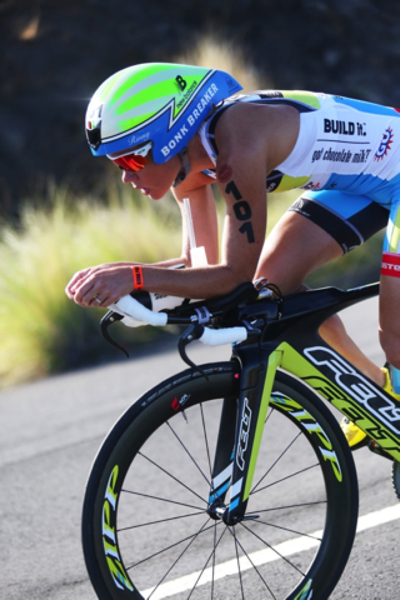
RinnieBikeMirinda Carfrae continues to be the clear #1 female athlete. She had another phenomenal Ironman-year: Winning Roth in the fastest time of the year and then defending her Kona title with an epic come-from-behind run, improving her rating by almost 13 minutes! She’s leading by ten minutes, but can she have another year like this?
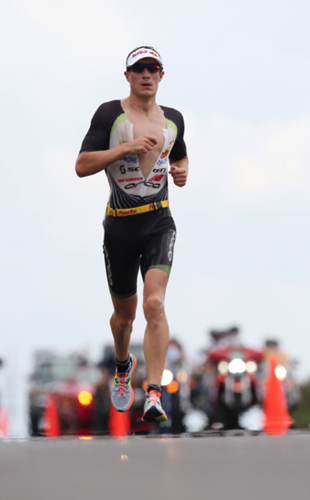
“Rookie of the year” is another obvious choice: Daniela Ryf. With her wins in Switzerland and Copenhagen and her second place in Kona she enters my ranking in #2, sneaking past a number of more established athletes. It seems as if she’ll continue on the path she took this year, but it’ll be hard to improve on winning the 70.3 champs and finishing second in Kona.

Rachel Joyce (#3), Caroline Steffen (#4) and Yvonne Van Vlerken (#5) all had a good season with solid results, but they are still looking for a great Kona race. Rachel wasn’t satisfied with her third place in Kona, Caroline was outright disappointed finishing fifth, and Yvonne even DNF’d. Still, I expect all of them to race strong in 2015, and their preparation will focus on beating Rinnie in Kona.

With Eva Wutti there is another new athlete in #6. She is however, a bit of “hit or miss”, either finishing sub-9 or not finishing at all. (Her three finishes are 8:37, 8:51 and 8:49.) I hope that she gets more stable and manages to be in the mix in the big races with strong fields.

Jodie Swallow in #7 finally managed to have long-distance results in line with her talent, work ethic and racing spirit. While she came up short of great results in South Africa (3rd) and Germany (7th), her season finished strong with a second place in 70.3 World Championships, a fourth place in Kona and also a third place in Bahrain. She proved she can be in the mix in the big races, and will be a strong podium contender in 2015.

Mary Beth Ellis (#8) continues to race on a high level, but she seems to be missing the “winning spark” that she had at the start of her long-distance career. Maybe she was still struggling after her injury late last season? She’ll work hard to win some more races in 2015.

After a stellar first season of IM racing culminating in a podium finish in Kona, Liz Blatchford (#9) solidified her position as one of the top IM racers. Similarly, Julia Gajer (#10) had a successful first Kona campaign, finishing in 6th place. Both will be strong contenders in their 2015 races and will look for a podium finish in Kona.

2014 Money Lists

This is a slightly updated excerpt from my free 2014 TriRating Report which has a lot more information and data on the 2014 season. You can still download it for free!

In other sports – such as golf – the main way of ranking athletes is by the amount of prize money they make. This year, I have extended my list: The 2013 list was limited only to WTC races, this year I also include Challenge and other notable longer races. Therefore, I have an overall money list and a few lists with money only from certain events.

Overall Money List

First, here is an overview of the races I have included in my money list:

Type Description Total Prize Money # of Athletes
Ironman Full-distance WTC races (not including Kona) $ 2.032.500 316
Kona Ironman World Championship (Kona) $ 650.000 20
70.3 Champs 70.3 World Championship (Mt. Tremblant) $ 250.000 20
Challenge Full-distance Challenge races (including Roth) $ 482.450 107
Bahrain Challenge Bahrain $ 440.000 20
Other MetaMan, Dubai, Embrun $ 430.000 38
Sum All included races $ 4.284.950 415

The next table shows the Top 20 athletes – both from the men and women – that have earned the most prize money in the 2014 calendar year from all the races listed above:

SebiKona

# Name Gender Total
1 Kienle, Sebastian M $145.000
2 Carfrae, Mirinda F $140.000
3 Ryf, Daniela F $125.000
4 Joyce, Rachel F $101.000
5 Raelert, Michael M $100.000
5 Frederiksen, Helle F $100.000
7 Swallow, Jodie F $78.000
8 Frodeno, Jan M $67.500
9 Hoffman, Ben M $65.000
10 Crawford, Gina F $64.500
11 Steffen, Caroline F $56.500
12 Hauschildt, Melissa F $55.000
13 Brown, Cameron M $52.500
14 Dreitz, Andreas M $50.000
15 Frommhold, Nils M $49.500
16 Gomez, Javier M $45.000
16 Butterfield, Tyler M $45.000
18 Kessler, Meredith F $43.000
19 Gross, Sara F $40.000
20 Potts, Andy M $37.500

For comparison, the ITU had a prize purse of $ 2.2 million in 2014. Their top earners are Javier Gomez (about $180.000) and Gwen Jorgensen (about $192.000).

Ironman Money List

Here are the Top 15 money earners from Ironman races (not including Kona):

# Name Gender Ironman Total Overall Rank
1 Gross, Sara F $40.000 $40.000 19
2 Alonso McKernan, Clemente M $31.000 $31.000 25
3 Kessler, Meredith F $30.000 $43.000 18
3 Corbin, Linsey F $30.000 $30.000 27
5 Williamson, Kelly F $27.500 $27.500 32
6 Abraham, Corinne F $26.750 $26.750 34
7 Kienle, Sebastian M $25.000 $145.000 1
7 Steffen, Caroline F $25.000 $56.500 11
7 Bockel, Dirk M $25.000 $26.500 35
7 Tollakson, TJ M $25.000 $25.000 40
11 Brown, Cameron M $22.500 $52.500 13
11 Wee, Bree F $22.500 $22.500 46
11 Ferreira, Amber F $22.500 $22.500 46
11 Braendli, Simone F $22.500 $22.500 46
15 Weiss, Michael M $21.500 $21.500 49

WTC Money List

Here are the Top 15 money earners from WTC races (including Kona and the 70.3 Champs):

# Name Gender Ironman Total Overall Rank
1 Kienle, Sebastian M $145.000 $145.000 1
2 Ryf, Daniela F $125.000 $125.000 3
3 Carfrae, Mirinda F $120.000 $140.000 2
4 Frodeno, Jan M $67.500 $67.500 8
5 Hoffman, Ben M $65.000 $65.000 9
6 Swallow, Jodie F $50.000 $78.000 7
7 Gomez, Javier M $45.000 $45.000 16
8 Steffen, Caroline F $44.000 $56.500 11
9 Joyce, Rachel F $40.000 $101.000 4
10 Kessler, Meredith F $40.000 $43.000 18
11 Gross, Sara F $40.000 $40.000 19
12 Frommhold, Nils M $38.500 $49.500 15
13 Potts, Andy M $37.500 $37.500 20
14 Ellis, Mary Beth F $33.000 $33.000 21
15 Aernouts, Bart M $31.500 $31.500 24

Money List from Challenge and other Races

After also adding Embrue, here are the Top 18 money earners from non-WTC races :

# Name Gender Non-WTC Total Challenge Bahrain Other Total
1 Raelert, Michael M $100.000   $100.000   $100.000
1 Frederiksen, Helle F $100.000   $100.000   $100.000
3 Joyce, Rachel F $61.000 $11.000 $50.000   $101.000
4 Dreitz, Andreas M $50.000   $50.000   $50.000
5 Hauschildt, Melissa F $47.000   $7.000 $40.000 $55.000
6 Butterfield, Tyler M $40.000     $40.000 $45.000
7 Crawford, Gina F $37.000 $7.000   $30.000 $64.500
8 Zamora, Marcel M $32.500     $32.500 $37.500
9 Brown, Cameron M $30.000     $30.000 $52.500
10 Swallow, Jodie F $28.000   $25.000 $3.000 $78.000
10 Croneborg, Fredrik M $28.000 $18.000   $10.000 $32.000
12 McNeice, Dylan M $26.000 $26.000     $28.500
13 Reed, Timothy M $25.000   $25.000   $31.000
14 Mullan, Eimear M $23.400   $23.400   $31.400
15 Carfrae, Mirinda F $20.000 $20.000     $140.000
15 Bracht, Timo M $20.000 $20.000     $25.000
17 Skipworth, Todd F $19.500     $19.500 $19.500
18 Van Vlerken, Yvonne F $19.000 $4.000   $15.000 $26.000
Select your currency
EUR Euro

By continuing to use the site, you agree to the use of cookies. more information

The cookie settings on this website are set to "allow cookies" to give you the best browsing experience possible. If you continue to use this website without changing your cookie settings or you click "Accept" below then you are consenting to this.

Close